


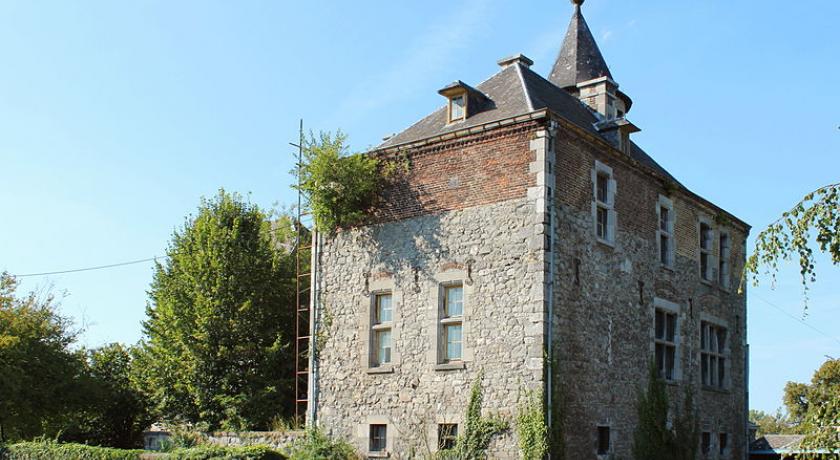

Description
Dalhem is a Walloon municipality located in the Belgian province of Liège.
Population as on 1 January 2016, 7302 people, 3614 men and 3688 women, an area of 36.06 km², with a density of 202.50 inhabitants per km².
The name Dalhem is of Germanic origin and means "place of residence in the valley" (lit. dale home/dale ham).
The municipality of Dalhem consists of the village of Dalhem as well as the following locations: Saint-Andre, Berneau (German: Bernau), Bombaye (Dutch: Bolbeek), Feneur, Mortroux, Neufchateau and Wasage (Dutch: Weerst).
The current municipality was formed during the fusion of the Belgian municipalities in 1977. The Château de Wodémont is within the municipality.
History
The town was founded in 1080 at the confluence of the Berwinne and Bolland. The 'Old Town' includes various monuments and houses: Medieval castle ruins, built houses of the sixteenth to the nineteenth century. The site was classified in 1978.
Under the Old Regime, the town was the center of Dalhem County, under control of the Duchy of Brabant since 1239. County adjoined the Duchy of Limburg, also owned Brabant. The Duchy of Limburg and the County Dalhem were then referred to as the Land of Outremeuse.
The territory will have its borders changed several times, following the religious wars of the sixteenth and seventeenth century. Mainly manifested by the War of the Eighty Years in these parts. The territory was prey to battles between the Calvinists and Catholics. The county then passed into the hands of the Spaniards, the United Provinces and Austria in modern times. Note that a Protestant minority in Dalhem persist until the early nineteenth century as a testimony of these turbulent times.
After the Congress of Vienna in 1814-1815. Dalhem was attached to the Kingdom of the Netherlands; William I. Indeed, the Austrians did not vindicate their right to these lands believing them too far, despite the will of the diplomat Metternich to restore Europe to the old regime. Finally, the City of Counts came under the aegis of Brussels when in 1830 Belgian Revolution commenced.
The Fort d'Aubin-Neufchâteau, the work of the fortified belt of Liège in 1940, is located in the territory of the town and recalls that Dalhem has also paid its tribute of blood during the early twentieth century wars.
In 1977, Dalhem common current is created, grouping around Dalhem seven surrounding villages. It was originally planned to merge the eight villages with the town of Visé and thus create a midsize city from Liège, which it could not do because of the refusal of several rural communes of the Dalhemoise region.
Etymology
Dalhem is a Germanic name, which means dwelling in the valley. There is also the Dalheim designated localities in the regions near the Luxembourg and the Eifel, Germany. A neighborhood in southwestern Berlin, housing the ethnological museum of the city, also named Dahlem.
The village was also named Dutch 's-Gravendal. Which literally means (Valley of the Count). This name is to be compared with Fouron-le-Comte (‘s-Gravenvoeren in Dutch), the other affiliates of the former County of Dalhem and which was once the place where the lord administered justice. This name is now un-utilized.
Heritage
- St. Pancras Church Tower (1714 nave and choir 1829-1830).
- Ruins of the castle of the Counts of Dalhem.
- Ancient walls.
- Postern Wichet Rose dating from 1520.
- Old Town Hall built in 1665 by the United Provinces regime.
- Mayor castle Henri Francotte (de) (1912), formerly House of Charity, built in a neo-Mosan style.
- Vicinal tunnel on the Liège-Fourons line built in 1904, the longest of its kind in Belgium (135 m).
- Conciergerie Château Albert Thys.
- Architectural ensembles reworked by Henry Le Boeuf in the nineteenth century including a manor overlooking the valley Bolland.
Events and folklore
Dalhem is renowned in the region for its festive spirit. Many events are well organized throughout the year: flea markets, village festivities, parties, marches, theater performances, exhibitions, cramignons.
The village is also known for its age-old opposition between 'Blue' and 'Red'. These two companies founded in the nineteenth century animate the village by many events including the village festival and celebration of their society (Feast of St. Louis for the Reds, Tunnel Day for the Blues).
Royal Youth Saint-Servais (Youth of the Blues) was founded in 1858. The Royal Youth 'Belgian Child' (Youth Reds) is initially a division of the Blues, due to a dispute regarding the acquisition of an organ by the parish priest in the late nineteenth century. From the post-war until the merger of Commons in 1977 these two associations were also local political parties.
Source https://en.wikipedia.org/wiki/Dalhem
Address
Dalhem
Bélgica
Lat: 50.713340759 - Lng: 5.722930431